

 More Products
 Compare










我的荣耀 开启荣耀之旅



 Disagree Terms
 Log out




[Sharing] Probably Everything You Need to Know about USB4


 Last reply :
You may have heard about the upcoming release of the USB4 protocol specifications, which will support 100W charging and doubled transfer bandwidth of 40 Gbps. You're probably impressed by the speed, but also wondering if it's so important for speed to increase with each of the new protocols. Aren't the existing USBs already good enough?
Why was USB put forward?
The personal computer revolution and increase in relevant hardware has facilitated growth in the quantity and variety of peripherals, from longstanding devices such as keyboards, mice, printers and scanners, to relatively newer technology like digital cameras and MP3 players. All of these machines require data exchanges and communication with a host machine, i.e. a personal computer, in order to function properly. USB was therefore proposed as a universal solution.
What is USB?
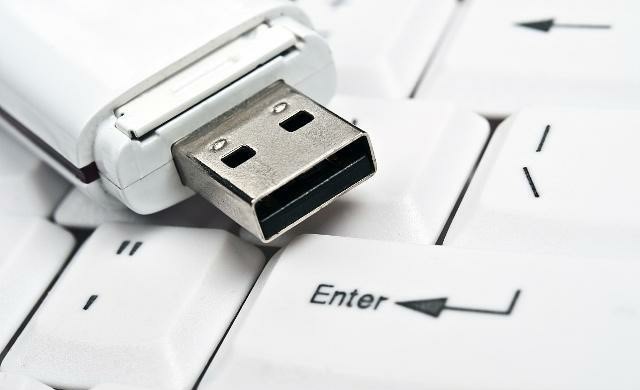
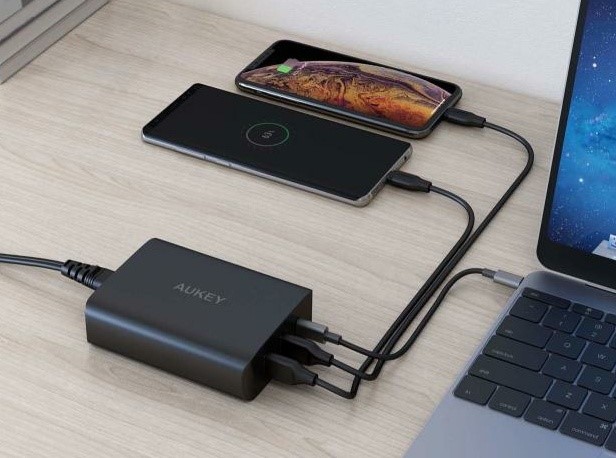
USB is short for Universal Serial Bus, a common interface that allows for communication between computers and peripheral devices such as mice, keyboards, printers, scanners, digital cameras, chargers, media devices, mobile phones, and external hard drives. It's easy to use, enables fast transmission, carries an independent power supply, and is highly flexible. The standard was jointly proposed by Intel, Compaq, IBM, Microsoft, DEC, NEC, and Nortel in 1994, with the release of Version 0.7 on November 11th later that year. A quarter century later, after years of iterations, USB has gained broad acceptance across the globe, and has come equipped with increasingly powerful capabilities. For instance, dual-headed USB cables now support connecting to two devices at once, and USB hubs offer even greater possibilities.
What is USB used for?
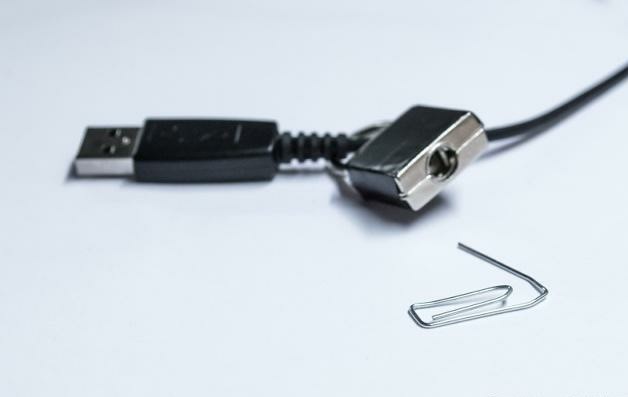
Thanks to its remarkable ease of use, high speeds, and flexible nature, USB has gradually replaced serial and parallel ports as a must-have interface on personal computers and a wide range of smart devices. USB supports plug and play, and is hot swappable. That is, you can directly plug in an external device and continue to use it without interruption, unlike with serial or parallel ports. Due to the unprecedented accessibility of USB, the computer peripheral market continues to grow, with the emergence of game controllers, stereo speakers, fast chargers, smart night lamps, USB fans, mini heaters, as well as other handy devices.
USB Versions and Transmission Rates
How fast is USB4?
USB4 piggybacks on existing USB Type-C cables, leveraging two high-speed channels on a single cable for a maximum throughput of 40 Gbps, twice the rate of the latest USB 3.2!
What can USB4 do for me?
Quite a bit! USB4 is backward compatible with Thunderbolt and all previous USB versions, which means that your existing devices can connect through USB4 without additional help — just plug them in and enjoy transmission speeds of up to 40 Gbps, and 100W lightning-fast charging. That means you can charge your phone to 100% within five minutes, before you've finished breakfast! Connections to external graphics cards will be supported, following HDMI 2.0 and Display 1.2 standards for video transmission. With USB4, you can link your laptop to one 5K display, or two 4K displays simultaneously. Regardless of the device, you'll just need a single cable for all of them!
Sounds like magic, right? Perhaps too good to be true? If you have any other questions about USB, or the future of charging and data transmission, please leave a comment below.


- Posts
- Following
- Followers
- Energy
-

 Redbeanice
Community Team
Redbeanice
Community Team
-
+ Follow

-
- 60 Posts
- 19 Following
- 218 Followers
- 4185 Energy


SUBSCRIPTION
I agree to receive the latest offers and information on HONOR products through email or IM (e.g. WhatsApp) provided below and advertisement on third-party platforms. I understand that I can unsubscribe anytime according to Chapter 5 of HONOR Platform Privacy Statement.
CONTACT

- Posts
- photo
- video

You may have heard about the upcoming release of the USB4 protocol specifications, which will support 100W charging and doubled transfer bandwidth of 40 Gbps. You're probably impressed by the speed, but also wondering if it's so important for speed to increase with each of the new protocols. Aren't the existing USBs already good enough?
Why was USB put forward?
The personal computer revolution and increase in relevant hardware has facilitated growth in the quantity and variety of peripherals, from longstanding devices such as keyboards, mice, printers and scanners, to relatively newer technology like digital cameras and MP3 players. All of these machines require data exchanges and communication with a host machine, i.e. a personal computer, in order to function properly. USB was therefore proposed as a universal solution.
What is USB?
USB is short for Universal Serial Bus, a common interface that allows for communication between computers and peripheral devices such as mice, keyboards, printers, scanners, digital cameras, chargers, media devices, mobile phones, and external hard drives. It's easy to use, enables fast transmission, carries an independent power supply, and is highly flexible. The standard was jointly proposed by Intel, Compaq, IBM, Microsoft, DEC, NEC, and Nortel in 1994, with the release of Version 0.7 on November 11th later that year. A quarter century later, after years of iterations, USB has gained broad acceptance across the globe, and has come equipped with increasingly powerful capabilities. For instance, dual-headed USB cables now support connecting to two devices at once, and USB hubs offer even greater possibilities.
What is USB used for?
Thanks to its remarkable ease of use, high speeds, and flexible nature, USB has gradually replaced serial and parallel ports as a must-have interface on personal computers and a wide range of smart devices. USB supports plug and play, and is hot swappable. That is, you can directly plug in an external device and continue to use it without interruption, unlike with serial or parallel ports. Due to the unprecedented accessibility of USB, the computer peripheral market continues to grow, with the emergence of game controllers, stereo speakers, fast chargers, smart night lamps, USB fans, mini heaters, as well as other handy devices.
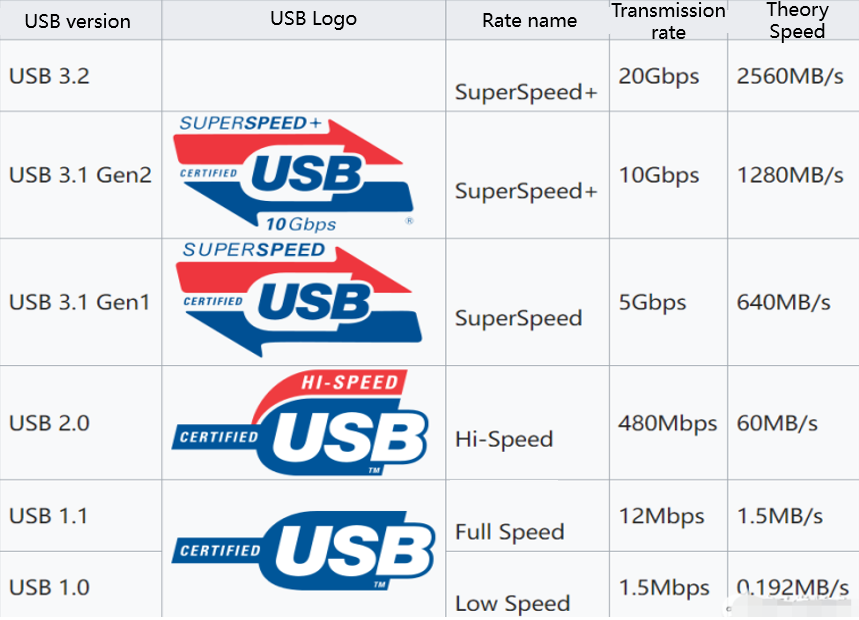
USB Versions and Transmission Rates
How fast is USB4?
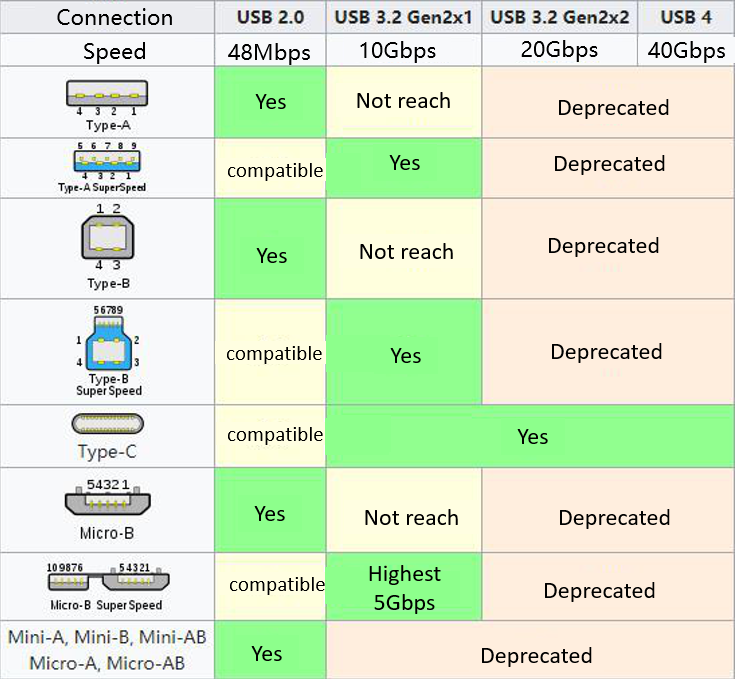
USB4 piggybacks on existing USB Type-C cables, leveraging two high-speed channels on a single cable for a maximum throughput of 40 Gbps, twice the rate of the latest USB 3.2!
What can USB4 do for me?
Quite a bit! USB4 is backward compatible with Thunderbolt and all previous USB versions, which means that your existing devices can connect through USB4 without additional help — just plug them in and enjoy transmission speeds of up to 40 Gbps, and 100W lightning-fast charging. That means you can charge your phone to 100% within five minutes, before you've finished breakfast! Connections to external graphics cards will be supported, following HDMI 2.0 and Display 1.2 standards for video transmission. With USB4, you can link your laptop to one 5K display, or two 4K displays simultaneously. Regardless of the device, you'll just need a single cable for all of them!
Sounds like magic, right? Perhaps too good to be true? If you have any other questions about USB, or the future of charging and data transmission, please leave a comment below.