

 More Products
 Compare









我的荣耀 开启荣耀之旅



 Disagree Terms
 Log out




[NEWS] What is 5G,its importance & its differences than 4G that you need to know?


 Last reply :
While Yes which known as YTL Communication in collaboration with Facebook are announce and started testing their Terragraphs trials begin 1st March in Penang Malaysia.Few weeks before that Maxis & Huawei has signed a strategic agreement to equip the telecommunications company with 5G network hardware.
What is 5G?? How its works and its benefits?? and how its differentiated with 4G?? We'll see those info's in this articles..
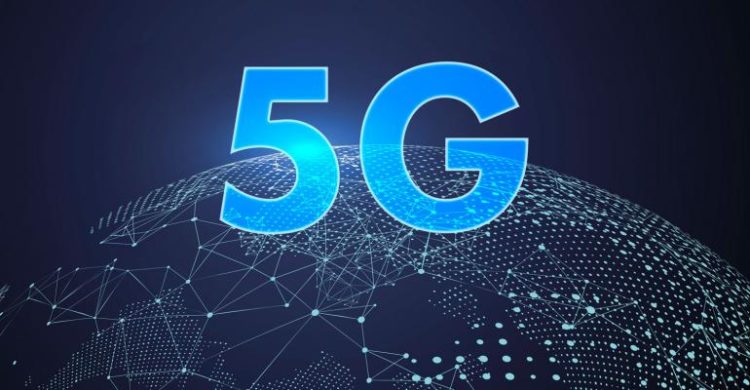
For those who are unfamiliar with its exact meaning, 5G is a catch-all name for the fifth generation of wireless technologies in much the same manner that 4G, 3G, 2G, and 1G are names for the previous generations of wireless technologies. It is relevant because the relevant parties came up with a consensus on the first shared standard for 5G, which has enabled them to start launching 5G services. As a result, seeing as how there are now numerous service providers out there that are either launching 5G service or in the process of launching 5G service, consumers should read up to make sure that they have a general idea of what they can expect. By being informed, they should be able to maximize their chances of choosing the right wireless services for themselves, thus maximizing the value of their spending.
Why Is 5G So Important?
For a lot of people, increased speed will be the stand-out characteristic of 5G. However, it is important to note that the standard promises to provide other benefits as well, with examples ranging from better responsiveness by reducing latency to the ability to connect more devices at the same time. Something that will prove critical as more and more people make more and more use of smart devices.
As a result, 5G promises to be a critical foundation of the further rise of smart devices. For example, driverless cars are already seeing use. However, there are people who expect that future driverless cars will communicate with one another while they are out on the road, thus enabling them to share information that can be used to provide better performance. Said driverless cars won’t be exchanging a great deal of information, but they will be needing to exchange a fair amount of information on a constant basis, meaning that they are going to need the kinds of latency made possible by the adoption of 5G. Provided that everything works out as expected, it is clear that 5G will play a pivotal role in making these more advanced driverless cars possible, which in turn, promises to provide safer travel than otherwise possible.
Of course, driverless cars won’t be the sole example of smart devices that will benefit from the adoption of 5G. As a result, 5G promises to be one of the factors that will speed up the creation of the Internet of Things, which promises to connect more devices than most people would have ever expected. On top of this, the speeds offered by 5G means that consumers could very well see further improvements in their existing services, with an excellent example being the potential for augmented reality on their phones and other mobile devices.
The Future is looking more futuristic
Summed up, the future is looking more and more futuristic, which is something that is being helped along by the adoption of 5G. However, interested individuals need to remember that 5G is just starting up, meaning that what they see in the near future won’t be everything that it will be capable of. For that matter, they might want to be careful about buying too much of the marketing hype that is starting to ramp up for 5G, seeing as how they need to remember that it is such a generic term that it doesn’t necessarily say much of anything about the specifics.
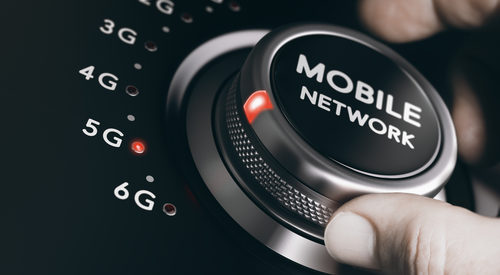
The fourth generation of mobile connectivity started to make waves in the late 2000s. 4G made mobile internet speeds up to 500 times faster than 3G and allowed support for HD TV on mobile, high–quality video calls, and fast mobile browsing. The development of 4G was a massive feat for mobile technology, especially for the evolution of smartphones and tablets.
4G is now common throughout the world, but things are about to change again. The Internet of Things is now a real possibility and 4G will not be able to manage the huge number of connections that will be on the network. It is expected that there will be more than 20bn connected devices by 2020, all of which will require a connection with great capacity. This is where 5G comes into force.
5G has started to create a hype recently when we saw the first trials of the capabilities of the network taking place. What is more, some of the capabilities of 5G were demonstrated during the 2018 Winter Games in PyeongChang, making the games the most exciting to date for both fans and participants.
So, what makes 5G so different from 4G?
Simply said, 5G is widely believed to be smarter, faster and more efficient than 4G. It promises mobile data speeds that far outstrip the fastest home broadband network currently available to consumers. With speeds of up to 100 gigabits per second, 5G is set to be as much as 100 times faster than 4G.
Low latency is a key differentiator between 4G and 5G. Latency is the time that passes from the moment information is sent from a device until it can be used by the receiver. Reduced latency means that you’d be able to use your mobile device connection as a replacement for your cable modem and Wi-Fi. Additionally, you’d be able to download and upload files quickly and easily, without having to worry about the network or phone suddenly crashing. You’d also be able to watch a 4K video almost straight away without having to experience any buffering time.
5G will be able to fix bandwidth issues. Currently, there are so many different devices connected to 3G and 4G networks, that they don’t have the infrastructure to cope effectively. 5G will be able to handle current devices and emerging technologies such as driverless cars and connected home products.
But it must remember that these scenarios are all still theoretical, and it will take a lot of investment by governments and mobile network operators to make them work. The security aspect of 5G also still needs to be figured out. With a greater number of users and improved services, 5G opens the door to a new level of threat. Governments and mobile operators must ensure they have the correct level of security in place before 5G can be rolled out.
While we heard there's upcoming smartphones release are with 5G network,whats your opinion in this matter?? Are you ready to except the upgrades in Malaysia or you still feel 4G is better and just need to stabalised it to works fine?? Because most of the areas in Malaysia still out of 4G coverage for Main Telco provider. Share your opinion in comments below ...
Source info : Gemalto & LifeWire


- Posts
- Following
- Followers
- Energy
-

 PeaceHunter
Community Team
PeaceHunter
Community Team
-
+ Follow

-
- 494 Posts
- 180 Following
- 2964 Followers
- 108748 Energy


SUBSCRIPTION
I agree to receive the latest offers and information on HONOR products through email or IM (e.g. WhatsApp) provided below and advertisement on third-party platforms. I understand that I can unsubscribe anytime according to Chapter 5 of HONOR Platform Privacy Statement.
CONTACT

- Posts
- photo
- video

While Yes which known as YTL Communication in collaboration with Facebook are announce and started testing their Terragraphs trials begin 1st March in Penang Malaysia.Few weeks before that Maxis & Huawei has signed a strategic agreement to equip the telecommunications company with 5G network hardware.
What is 5G?? How its works and its benefits?? and how its differentiated with 4G?? We'll see those info's in this articles..
For those who are unfamiliar with its exact meaning, 5G is a catch-all name for the fifth generation of wireless technologies in much the same manner that 4G, 3G, 2G, and 1G are names for the previous generations of wireless technologies. It is relevant because the relevant parties came up with a consensus on the first shared standard for 5G, which has enabled them to start launching 5G services. As a result, seeing as how there are now numerous service providers out there that are either launching 5G service or in the process of launching 5G service, consumers should read up to make sure that they have a general idea of what they can expect. By being informed, they should be able to maximize their chances of choosing the right wireless services for themselves, thus maximizing the value of their spending.
Why Is 5G So Important?
For a lot of people, increased speed will be the stand-out characteristic of 5G. However, it is important to note that the standard promises to provide other benefits as well, with examples ranging from better responsiveness by reducing latency to the ability to connect more devices at the same time. Something that will prove critical as more and more people make more and more use of smart devices.
As a result, 5G promises to be a critical foundation of the further rise of smart devices. For example, driverless cars are already seeing use. However, there are people who expect that future driverless cars will communicate with one another while they are out on the road, thus enabling them to share information that can be used to provide better performance. Said driverless cars won’t be exchanging a great deal of information, but they will be needing to exchange a fair amount of information on a constant basis, meaning that they are going to need the kinds of latency made possible by the adoption of 5G. Provided that everything works out as expected, it is clear that 5G will play a pivotal role in making these more advanced driverless cars possible, which in turn, promises to provide safer travel than otherwise possible.
Of course, driverless cars won’t be the sole example of smart devices that will benefit from the adoption of 5G. As a result, 5G promises to be one of the factors that will speed up the creation of the Internet of Things, which promises to connect more devices than most people would have ever expected. On top of this, the speeds offered by 5G means that consumers could very well see further improvements in their existing services, with an excellent example being the potential for augmented reality on their phones and other mobile devices.
The Future is looking more futuristic
Summed up, the future is looking more and more futuristic, which is something that is being helped along by the adoption of 5G. However, interested individuals need to remember that 5G is just starting up, meaning that what they see in the near future won’t be everything that it will be capable of. For that matter, they might want to be careful about buying too much of the marketing hype that is starting to ramp up for 5G, seeing as how they need to remember that it is such a generic term that it doesn’t necessarily say much of anything about the specifics.
The fourth generation of mobile connectivity started to make waves in the late 2000s. 4G made mobile internet speeds up to 500 times faster than 3G and allowed support for HD TV on mobile, high–quality video calls, and fast mobile browsing. The development of 4G was a massive feat for mobile technology, especially for the evolution of smartphones and tablets.
4G is now common throughout the world, but things are about to change again. The Internet of Things is now a real possibility and 4G will not be able to manage the huge number of connections that will be on the network. It is expected that there will be more than 20bn connected devices by 2020, all of which will require a connection with great capacity. This is where 5G comes into force.
5G has started to create a hype recently when we saw the first trials of the capabilities of the network taking place. What is more, some of the capabilities of 5G were demonstrated during the 2018 Winter Games in PyeongChang, making the games the most exciting to date for both fans and participants.
So, what makes 5G so different from 4G?
Simply said, 5G is widely believed to be smarter, faster and more efficient than 4G. It promises mobile data speeds that far outstrip the fastest home broadband network currently available to consumers. With speeds of up to 100 gigabits per second, 5G is set to be as much as 100 times faster than 4G.
Low latency is a key differentiator between 4G and 5G. Latency is the time that passes from the moment information is sent from a device until it can be used by the receiver. Reduced latency means that you’d be able to use your mobile device connection as a replacement for your cable modem and Wi-Fi. Additionally, you’d be able to download and upload files quickly and easily, without having to worry about the network or phone suddenly crashing. You’d also be able to watch a 4K video almost straight away without having to experience any buffering time.
5G will be able to fix bandwidth issues. Currently, there are so many different devices connected to 3G and 4G networks, that they don’t have the infrastructure to cope effectively. 5G will be able to handle current devices and emerging technologies such as driverless cars and connected home products.
But it must remember that these scenarios are all still theoretical, and it will take a lot of investment by governments and mobile network operators to make them work. The security aspect of 5G also still needs to be figured out. With a greater number of users and improved services, 5G opens the door to a new level of threat. Governments and mobile operators must ensure they have the correct level of security in place before 5G can be rolled out.
While we heard there's upcoming smartphones release are with 5G network,whats your opinion in this matter?? Are you ready to except the upgrades in Malaysia or you still feel 4G is better and just need to stabalised it to works fine?? Because most of the areas in Malaysia still out of 4G coverage for Main Telco provider. Share your opinion in comments below ...
Source info : Gemalto & LifeWire