

 More Products
 Compare










我的荣耀 开启荣耀之旅



 Disagree Terms
 Log out




HONOR 20 AIS Super Night Mode: Enabling Smartphone Night Photography in the Best Possible Light


 Last reply :

Photography is the art of manipulating light to create new realities and the irony is that a photo can be both ultra-realistic and other-worldly at the same time. Inevitably, light becomes a key factor in determining the quality of a photograph. Professional cameras, without space limitations, are better designed to admit and utilize light. However, smartphone cameras must fit within a compact body and have compatible software in order to meet the standards of professional camera. Therefore, when it comes to low-light photography, the limitations of any smartphone camera are especially pronounced.
The recently-unveiled HONOR 20 is a gamechanger in night photography. It is embedded with a new feature – the AI-enabled Image Stabilization (AIS) Super Night mode – which aims to improve image quality of night photography significantly. The HONOR 10, predecessor to the HONOR 20 Series – provided a glimpse of enhanced night photography. However, that is only a fraction of what the HONOR 20 is capable of. Let’s deep-dive into this feature.
Using a simple analogy, let’s try to comprehend the main challenge smartphone manufacturers face when attempting to optimize night photography. Let’s imagine a camera as a room where light is collected and processed. The exposure time is the duration of time during which the room's windows are open. During daytime, when there is abundant light, it only requires 1/50th to 1/100th of a second to fill the room with light. However, during night time or under poor lighting conditions, at least two whole seconds are required to collect enough light to create a photograph. In other words, the longer the "window" is open, the more light will enter the room.
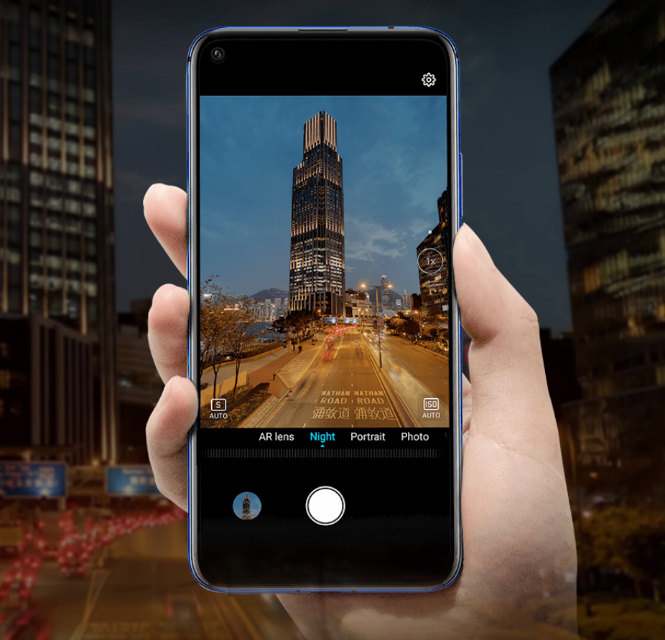
Having the “window” open for two whole seconds is actually an eternity on a camera. Even the slightest tremor during this period causes the picture to come out blurry beyond recognition. Serious photographers unanimously agree that night shooting requires the use of a tripod, but the vast majority of smartphones users take pictures spontaneously rather than a planned photo shoot. The AIS Super Night mode resolves the tripod issue by employing fragmentation - breaking the long shooting process into shortened exposures. AIS is based on HDR processing, which means that multiple images (i.e. up to 16 different exposure shots) are taken with one click, and the best elements of each image are meticulously assembled to form the final picture. Shorter exposures ensure the right lighting balance in brightly lit areas, while longer exposures restore detail in darker regions. This method differs from that for traditional smartphones where a simple, continuous long exposure is used to improve image brightness.

The AIS Super Night Mode works through these four steps:
1. AI Handheld Detection
To initiate night photography, the HONOR 20 will detect whether the user is taking a picture by hand. This detection is driven by its 7nm Kirin 980 AI chipset, which will analyze the preview image using its gravity and gyro sensors. This process occurs immediately (i.e. within 0.2 seconds) once the user presses the shutter. In order to ensure greater accuracy in information processing, HONOR’s R&D team collated a mountain of data, ranging from user photography preferences to the specifications of camera tripods, to help the AI make a more precise judgement. In addition to the impressively fast detection speed, the accuracy has been proven to exceed 98 percent (*the testing data is from HONOR lab).
2. Self-Correcting Photometry
After detecting that the user is taking a hand-held shot, the HONOR 20 must utilize photometry to create specific settings for each exposure that has been generated. Simply put, photometry is a method for measuring the relative strength of light. In fact, such photometric system exists naturally within our bodies. For example, when there is presence of a strong light, our pupils automatically contract to reduce the amount of incoming light. On the other hand, in a dimly-lit environment, our pupils will dilate to allow for more light to enter. Modelling off this natural phenomenon, HONOR engineers designed a fully automatic AI photometric system to replicate how much light enters the camera sensor.
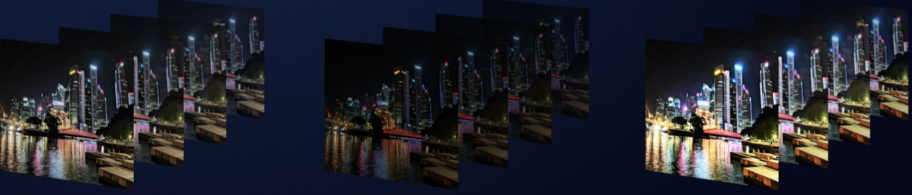
Standard Under-exposure Over-exposure
When the user presses the shutter, the AI photometric system uses crucial information obtained through scene recognition, the luminosity and light source distribution in the preview image, and the amount of jitter, to automatically configure the exposure parameters and number of frames. In a low-light environment, the HONOR 20 sets a shorter exposure time and more frames; when the surrounding is brighter, the HONOR 20 sets a longer exposure time and fewer frames. At the same time, when the jitter is small, the exposure time is made longer, and vice versa. Only when the actual exposure reaches the preset value will the whole exposure and light detection process end to make sure the final photo is taking in enough light.
3. Clarity through Sheer Computing
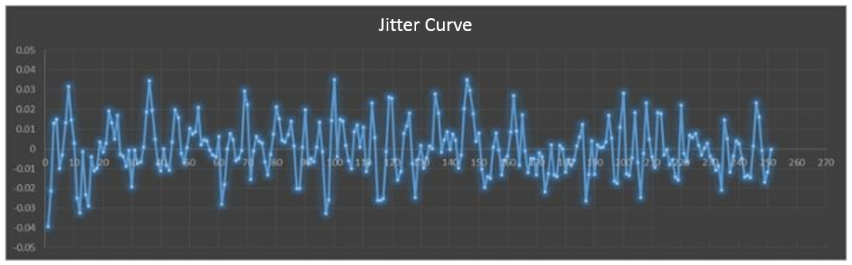
The HONOR 20 ensures crystal-clear images via two steps. Firstly, images are removed based on their sharpness and this constitutes the first step for jitter rectification. Secondly, a set of pictures that are captured at approximately the same time are combined to form a new shot. This step ramifies the effects of the user’s hand jitters.
Jitter analysis of HONOR 20 handheld detection from HONOR lab
Unsurprisingly, this 2-step process requires enormous computing power. For instance, more than 12 million tests are required for a single 12 MP image. A synthesis of 20 image frames requires over 10 billion computations. The HONOR 20 Dual-NPU Kirin 980 chipset is sufficiently powerful to process a large amount of data to boost its image processing capabilities, thereby enabling top-notch night photography.
4. Image Synthesis
The final step in the AIS Super Night mode involves seamlessly combining all the pre-requisite images into a single picture. While the images are being combined, or synthesized, the AI ensures that the brighter areas are not overexposed, and that the darker regions are more luminous. Furthermore, at the time of synthesis, discrepancies are detected and corrected by the pixels. Parts of the image that are considerably different from others are corrected to ensure that the final synthesized image is clear and sharp. Lastly, noise reduction is also carried out.
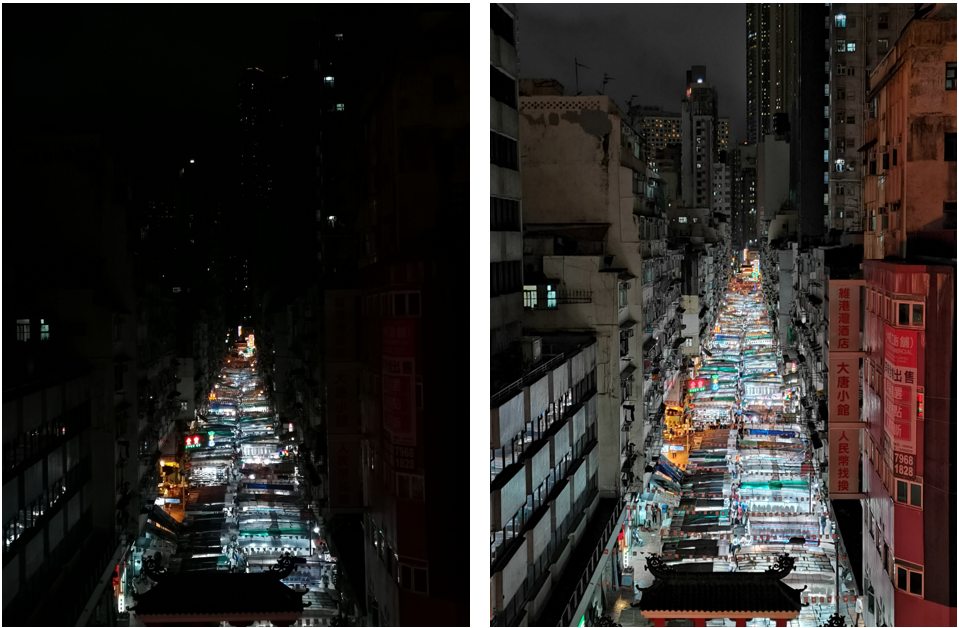
Without AIS Super Night Mode With AIS Super Night Mode
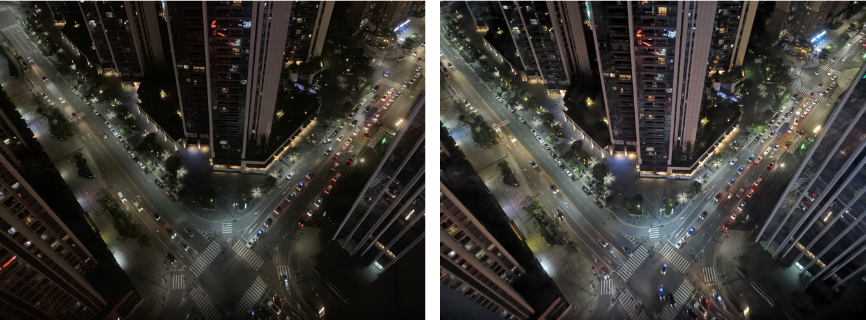
Without AIS Super Night Mode With AIS Super Night Mode
Sample photos taken with HONOR 20:





- Posts
- Following
- Followers
- Energy
-

 Redbeanice
Community Team
Redbeanice
Community Team
-
+ Follow

-
- 60 Posts
- 19 Following
- 218 Followers
- 4185 Energy


SUBSCRIPTION
I agree to receive the latest offers and information on HONOR products through email or IM (e.g. WhatsApp) provided below and advertisement on third-party platforms. I understand that I can unsubscribe anytime according to Chapter 5 of HONOR Platform Privacy Statement.
CONTACT

- Posts
- photo
- video

Photography is the art of manipulating light to create new realities and the irony is that a photo can be both ultra-realistic and other-worldly at the same time. Inevitably, light becomes a key factor in determining the quality of a photograph. Professional cameras, without space limitations, are better designed to admit and utilize light. However, smartphone cameras must fit within a compact body and have compatible software in order to meet the standards of professional camera. Therefore, when it comes to low-light photography, the limitations of any smartphone camera are especially pronounced.
The recently-unveiled HONOR 20 is a gamechanger in night photography. It is embedded with a new feature – the AI-enabled Image Stabilization (AIS) Super Night mode – which aims to improve image quality of night photography significantly. The HONOR 10, predecessor to the HONOR 20 Series – provided a glimpse of enhanced night photography. However, that is only a fraction of what the HONOR 20 is capable of. Let’s deep-dive into this feature.
Using a simple analogy, let’s try to comprehend the main challenge smartphone manufacturers face when attempting to optimize night photography. Let’s imagine a camera as a room where light is collected and processed. The exposure time is the duration of time during which the room's windows are open. During daytime, when there is abundant light, it only requires 1/50th to 1/100th of a second to fill the room with light. However, during night time or under poor lighting conditions, at least two whole seconds are required to collect enough light to create a photograph. In other words, the longer the "window" is open, the more light will enter the room.
Having the “window” open for two whole seconds is actually an eternity on a camera. Even the slightest tremor during this period causes the picture to come out blurry beyond recognition. Serious photographers unanimously agree that night shooting requires the use of a tripod, but the vast majority of smartphones users take pictures spontaneously rather than a planned photo shoot. The AIS Super Night mode resolves the tripod issue by employing fragmentation - breaking the long shooting process into shortened exposures. AIS is based on HDR processing, which means that multiple images (i.e. up to 16 different exposure shots) are taken with one click, and the best elements of each image are meticulously assembled to form the final picture. Shorter exposures ensure the right lighting balance in brightly lit areas, while longer exposures restore detail in darker regions. This method differs from that for traditional smartphones where a simple, continuous long exposure is used to improve image brightness.
The AIS Super Night Mode works through these four steps:
1. AI Handheld Detection
To initiate night photography, the HONOR 20 will detect whether the user is taking a picture by hand. This detection is driven by its 7nm Kirin 980 AI chipset, which will analyze the preview image using its gravity and gyro sensors. This process occurs immediately (i.e. within 0.2 seconds) once the user presses the shutter. In order to ensure greater accuracy in information processing, HONOR’s R&D team collated a mountain of data, ranging from user photography preferences to the specifications of camera tripods, to help the AI make a more precise judgement. In addition to the impressively fast detection speed, the accuracy has been proven to exceed 98 percent (*the testing data is from HONOR lab).
2. Self-Correcting Photometry
After detecting that the user is taking a hand-held shot, the HONOR 20 must utilize photometry to create specific settings for each exposure that has been generated. Simply put, photometry is a method for measuring the relative strength of light. In fact, such photometric system exists naturally within our bodies. For example, when there is presence of a strong light, our pupils automatically contract to reduce the amount of incoming light. On the other hand, in a dimly-lit environment, our pupils will dilate to allow for more light to enter. Modelling off this natural phenomenon, HONOR engineers designed a fully automatic AI photometric system to replicate how much light enters the camera sensor.
Standard Under-exposure Over-exposure
When the user presses the shutter, the AI photometric system uses crucial information obtained through scene recognition, the luminosity and light source distribution in the preview image, and the amount of jitter, to automatically configure the exposure parameters and number of frames. In a low-light environment, the HONOR 20 sets a shorter exposure time and more frames; when the surrounding is brighter, the HONOR 20 sets a longer exposure time and fewer frames. At the same time, when the jitter is small, the exposure time is made longer, and vice versa. Only when the actual exposure reaches the preset value will the whole exposure and light detection process end to make sure the final photo is taking in enough light.
3. Clarity through Sheer Computing
The HONOR 20 ensures crystal-clear images via two steps. Firstly, images are removed based on their sharpness and this constitutes the first step for jitter rectification. Secondly, a set of pictures that are captured at approximately the same time are combined to form a new shot. This step ramifies the effects of the user’s hand jitters.
Jitter analysis of HONOR 20 handheld detection from HONOR lab
Unsurprisingly, this 2-step process requires enormous computing power. For instance, more than 12 million tests are required for a single 12 MP image. A synthesis of 20 image frames requires over 10 billion computations. The HONOR 20 Dual-NPU Kirin 980 chipset is sufficiently powerful to process a large amount of data to boost its image processing capabilities, thereby enabling top-notch night photography.
4. Image Synthesis
The final step in the AIS Super Night mode involves seamlessly combining all the pre-requisite images into a single picture. While the images are being combined, or synthesized, the AI ensures that the brighter areas are not overexposed, and that the darker regions are more luminous. Furthermore, at the time of synthesis, discrepancies are detected and corrected by the pixels. Parts of the image that are considerably different from others are corrected to ensure that the final synthesized image is clear and sharp. Lastly, noise reduction is also carried out.
Without AIS Super Night Mode With AIS Super Night Mode
Without AIS Super Night Mode With AIS Super Night Mode
Sample photos taken with HONOR 20: