

 More Products
 Compare











我的荣耀 开启荣耀之旅



 Disagree Terms
 Log out




Honor Content Crew]- Products Info- How Smart Watches/Bands Monitor Sleep Activities And Quality? Does It Accurate?


 Last reply :
As a medical health website article reviewer and advisor, I notice there are a lot of articles talk about what do smart watches track, for sleep quality monitoring such as REM (random eye movement) and non REM sleep.
However, we hardly find any article talks about how these wearing devices perform it and whether it is reliable?
In this article, let me make you "see the unseen".

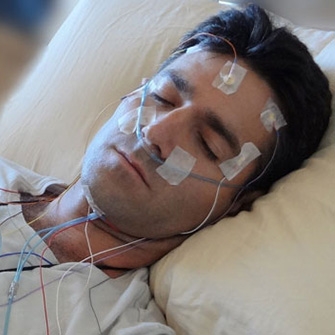
When you have sleeping problem, doctors will normally advice you to go for sleep study (which also known as polysomnography) to rule out any sleep disorder. It is the gold standard of sleep assessment. Usually,it is conducted in a sleep lab or sleep clinic with multiple electrodes applied on you in order to get the below information throughout your sleep: -Brain waves. -Breathing. -Heart rate. -Body movement. -Leg movement. -Eye movement. -Blood oxygen levels. -The positions you sleep in during the night. After that,sleep specialists will assess the above information to evaluate your sleep quality and whether there is any sleep disorder.
For wearing devices,the main principle of sleep tracking is by using accelerometer to measure and record movement during sleep (which also known as actigraphy).
Principly, certain amount of movement corresponds with awake state, and periods of being still indicates that you’re asleep.
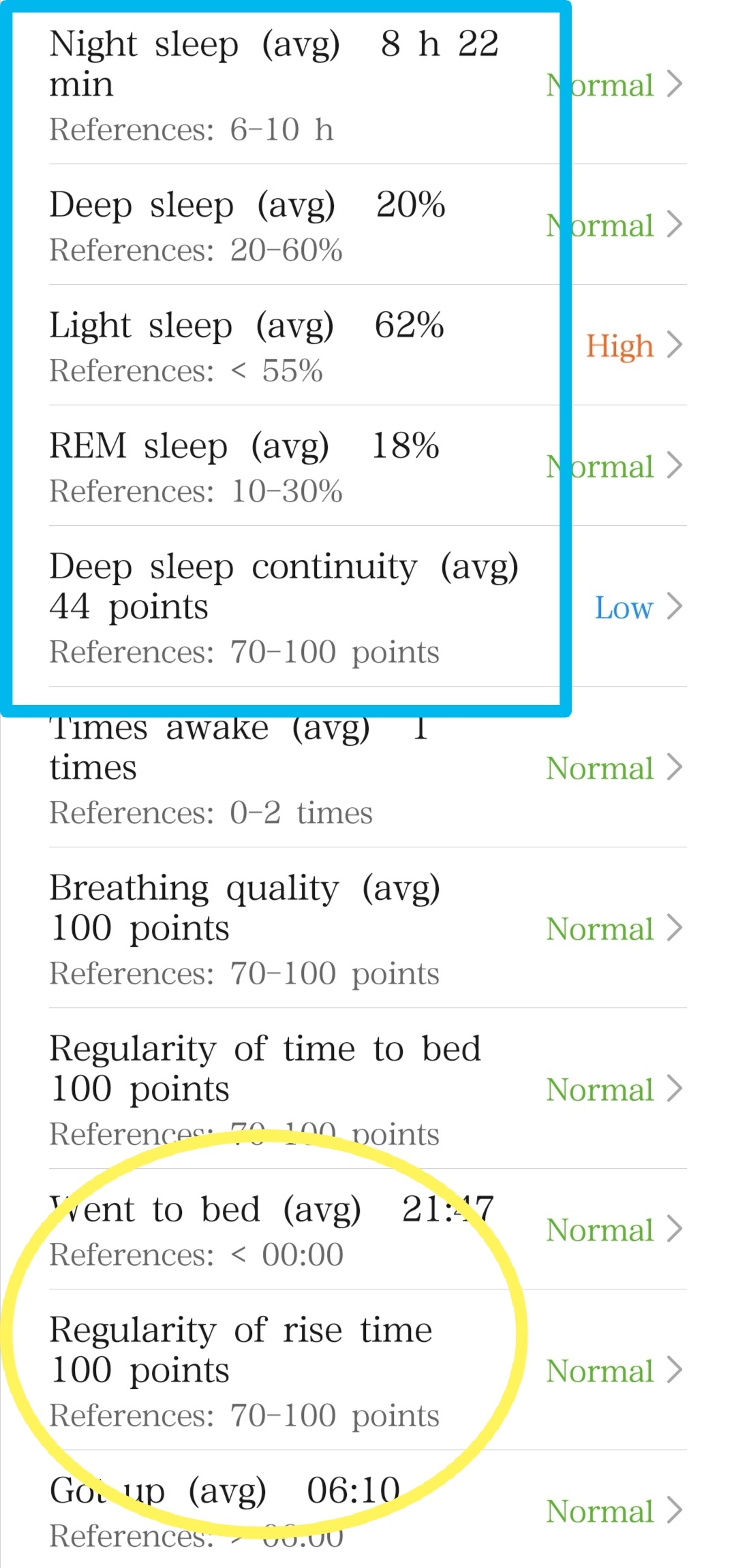
In adjuvant of this method,some of the wearing devices such as honor and Huawei wearing devices also integrate heart rate and respirator rate monitoring in their sleep monitoring system to increase the accuracy of identifying phases of sleep (as shown in the blue rectangle).
Moreover, honor/ Huawei wearable devices can also identify your sleep cycle by analysing the sleep data collected everyday (as shown in the yellow circle)
QUESTION: IS IT ACCURATE ?
There are researches done in 2011 and 2013 to assess to accuracy of wearing devices in term of sleep monitoring.
The research revealed wrist actigraphy can be quite accurate when it comes to estimating information such as total time asleep, sleep percentage, and how long after sleep waking occurs.
However, they also state that the main limitation is mistaking being awake and motionless for being asleep.This could then make it difficult for those who wake many times, or with severe insomnia, and who tend to lie still in bed awake rather than move about.
Thus, in conclusion, wearing devices are able to track sleep data accurately if your sleep is very well (because you have minimal movement during a good sleep).On the other hand, when you have a disrupted night,sleep data errors will become more apparent.

REFERENCES
1.Measuring Sleep: Accuracy, Sensitivity, and Specificity of Wrist Actigraphy Compared to Polysomnography Miguel Marino, Yi Li, Michael N. Rueschman, J. W. Winkelman, J. M. Ellenbogen, J. M. Solet, Hilary Dulin, Lisa F. Berkman, Orfeu M. Buxton Sleep. 2013 Nov 1; 36(11): 1747–1755. Published online 2013 Nov 1. doi: 10.5665/sleep.3142
2.Martin JL, Hakim AD. Wrist actigraphy. Chest. 2011;139(6):1514–1527. doi:10.1378/chest.10-1872



- Posts
- Following
- Followers
- Energy
-

 Dr Gabriel
Columnist
Dr Gabriel
Columnist
-
+ Follow

-
- 88 Posts
- 17 Following
- 93 Followers
- 4935 Energy


SUBSCRIPTION
I agree to receive the latest offers and information on HONOR products through email or IM (e.g. WhatsApp) provided below and advertisement on third-party platforms. I understand that I can unsubscribe anytime according to Chapter 5 of HONOR Platform Privacy Statement.
CONTACT

- Posts
- photo
- video

As a medical health website article reviewer and advisor, I notice there are a lot of articles talk about what do smart watches track, for sleep quality monitoring such as REM (random eye movement) and non REM sleep.
However, we hardly find any article talks about how these wearing devices perform it and whether it is reliable?
In this article, let me make you "see the unseen".
When you have sleeping problem, doctors will normally advice you to go for sleep study (which also known as polysomnography) to rule out any sleep disorder. It is the gold standard of sleep assessment. Usually,it is conducted in a sleep lab or sleep clinic with multiple electrodes applied on you in order to get the below information throughout your sleep: -Brain waves. -Breathing. -Heart rate. -Body movement. -Leg movement. -Eye movement. -Blood oxygen levels. -The positions you sleep in during the night. After that,sleep specialists will assess the above information to evaluate your sleep quality and whether there is any sleep disorder.
For wearing devices,the main principle of sleep tracking is by using accelerometer to measure and record movement during sleep (which also known as actigraphy).
Principly, certain amount of movement corresponds with awake state, and periods of being still indicates that you’re asleep.
In adjuvant of this method,some of the wearing devices such as honor and Huawei wearing devices also integrate heart rate and respirator rate monitoring in their sleep monitoring system to increase the accuracy of identifying phases of sleep (as shown in the blue rectangle).
Moreover, honor/ Huawei wearable devices can also identify your sleep cycle by analysing the sleep data collected everyday (as shown in the yellow circle)
QUESTION: IS IT ACCURATE ?
There are researches done in 2011 and 2013 to assess to accuracy of wearing devices in term of sleep monitoring.
The research revealed wrist actigraphy can be quite accurate when it comes to estimating information such as total time asleep, sleep percentage, and how long after sleep waking occurs.
However, they also state that the main limitation is mistaking being awake and motionless for being asleep.This could then make it difficult for those who wake many times, or with severe insomnia, and who tend to lie still in bed awake rather than move about.
Thus, in conclusion, wearing devices are able to track sleep data accurately if your sleep is very well (because you have minimal movement during a good sleep).On the other hand, when you have a disrupted night,sleep data errors will become more apparent.
REFERENCES
1.Measuring Sleep: Accuracy, Sensitivity, and Specificity of Wrist Actigraphy Compared to Polysomnography Miguel Marino, Yi Li, Michael N. Rueschman, J. W. Winkelman, J. M. Ellenbogen, J. M. Solet, Hilary Dulin, Lisa F. Berkman, Orfeu M. Buxton Sleep. 2013 Nov 1; 36(11): 1747–1755. Published online 2013 Nov 1. doi: 10.5665/sleep.3142
2.Martin JL, Hakim AD. Wrist actigraphy. Chest. 2011;139(6):1514–1527. doi:10.1378/chest.10-1872